
The Priority of Preaching

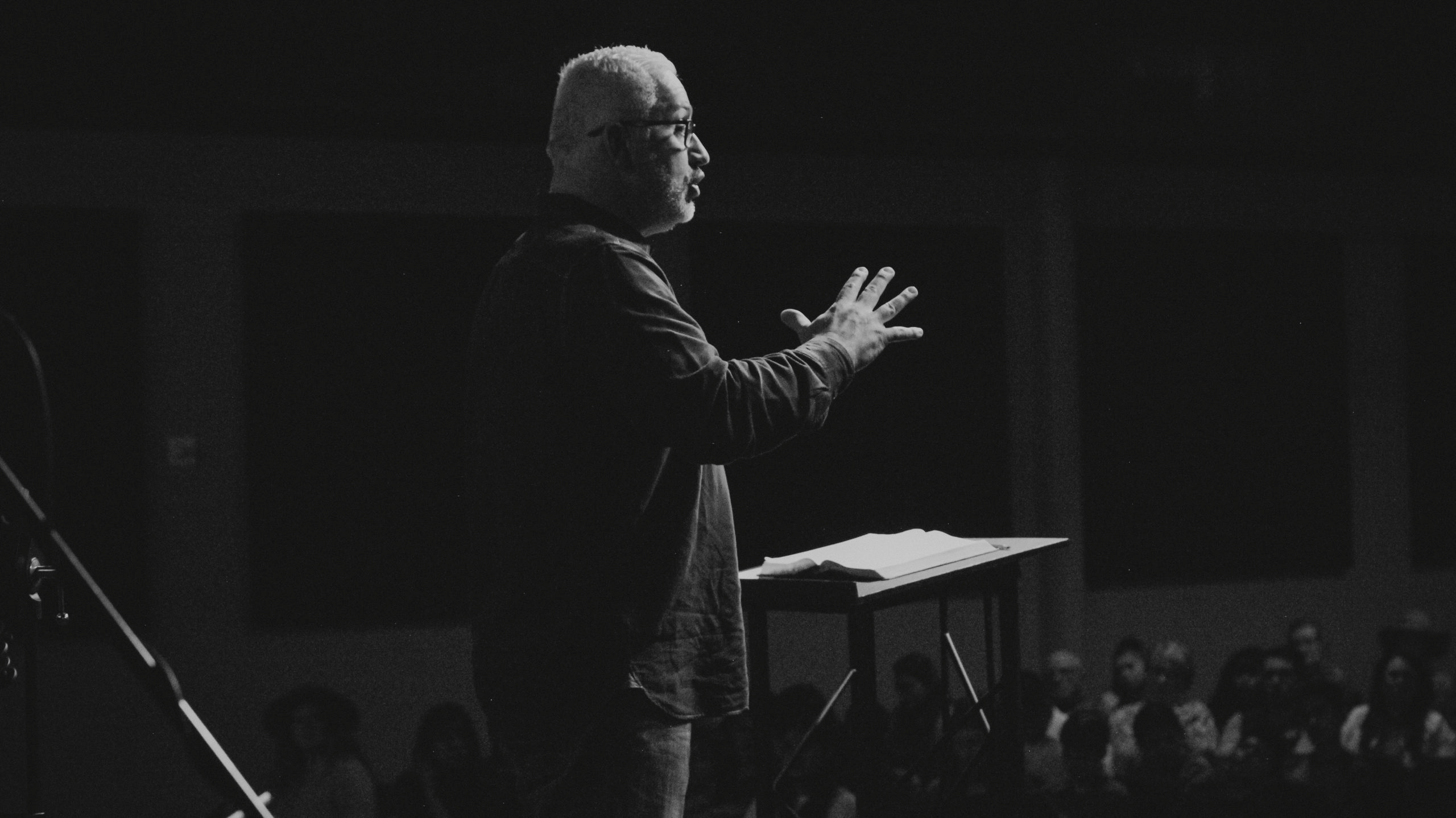
A church consultant I know claims that preaching is irrelevant and outmoded. What modern churches need instead is testimony, individual believers sharing with one another how they’re living Christ-like lives. I don’t believe him for one minute, but he’s made a good living travelling around the country sharing his opinion.
According to him, the didactic nature of preaching—at least in the classical sense of a designated individual instructing a congregation in biblical theology and godly living—no longer has the impact it once did. People today don’t want to be told what to believe. They want to be shown how to live.
The consultant isn’t alone. Many observers question the place of preaching in the modern church, to the point where it’s an open question if it will have any place at all in the future church. If I understand the thinking behind the criticism, the problem is how the act of preaching plays into the disconnect between the modern world and local churches. How could someone be so arrogant as to stand behind a pulpit—ornate wood for the traditionalist, plexiglass for the modern crowd, none at all for really contemporary congregations—and claim that there is a Savior who alone can redeem this broken world and all of us who live in it?
The Bible, though, casts a different light on the place of preaching:
How then will they call on him in whom they have not believed? And how are they to believe in him of whom they have never heard? And how are they to hear without someone preaching? And how are they to preach unless they are sent? As it is written: ‘How beautiful are the feet of those who preach the good news!’ (Romans 10:14-15)
Whatever critics may say, preaching has an indispensable place in the church and in the world. So John Chrysostom—a preacher so eloquent he’s known to history as “golden tongue”—saved the early church from government domination. A thousand years later Francis of Assisi saved the medieval church from itself. Preaching was the means of success for both.
Martin Luther’s writings, fleshed out in his sermons, initiated the Protestant Reformation. John Wesley’s preaching transformed the British people and altered the course of their nation. Charles Finney’s preaching changed the fabric of American society through the Second Great Awakening.
Closer to our own time, Harry Emerson Fosdick reconciled the emerging insights of modern science with historic Christian theology from the pulpit of New York’s Riverside Church. Billy Graham called the post-modern world to repentance. Pope John Paul II preached down the Soviet Union.
Through every era, God has raised up preachers to proclaim that Jesus is the only hope of the world and anything other than Jesus will never satisfy our souls.
Preaching isn’t testimony. Neither is it story-telling, dialogue, conversation, videos, drama productions, narrative, meta-narrative, cute outlines, memorable acronyms, alliterative points, comedy sketches, personal revelations, interviews, probing questions, political activism overlaid with a veneer of religious cliches, boring theological lectures, interesting theological lectures, history lectures, pop psychology lectures, adventures into positive thinking, diatribes against What’s Wrong With America, complaints against people in the congregation, whining about life’s unfair conditions, personal agendas dressed up with scriptural references, humorous personal experiences and all the other rhetorical tricks of the trade that modern pastors—from traditionalist to contemporary to everything in between—are prone to take advantage of.
Instead, the primary Greek word in the New Testament for preaching, kerusso, means “pronouncement” or “announcement.” In other words, the preacher is one who announces what God’s Word reveals about his character; his actions through history, culminating in the life, death and resurrection of his Son, Jesus; and his providential control of all of creation, up to and including the judgment that he will one day exercise over each one of us.
That’s why, when the older Paul instructs his younger colleague Timothy, he points to kerusso as the cornerstone of pastoral leadership:
Preach the word; be ready in season and out of season; reprove, rebuke, and exhort, with complete patience and teaching. (2 Timothy 4:2)
Two personal experiences stick in my mind about the priority of preaching. The first took place in an Eastern Orthodox Church that I visited on Palm Sunday a while back.
The worship space—they called it the temple—was filled floor to ceiling with icons, candles and incense. There weren’t any pews or seats. Everyone stood for the two-hour-long service. Sight, sound, smell, taste, touch—all five senses were used in the course of the worship service.
But after all the earlier portions of the service, the priest did something that caught me by surprise. He took off his ornate headpiece, grabbed a Bible and stepped out from the Royal Doors (the swinging doors that separate the congregation from the altar area) and into the middle of the congregation to preach. The people in attendance sat down on the floor. Young and old, men and women—the congregation sprawled wherever they could find space around their priest. The only exceptions were three elderly nuns who slept peacefully along one wall through the whole service.
The Bible passage for his sermon described how Lazarus, dead in his grave four days by the time Jesus comes onto the scene, responded to the summons issued by the Lord. Lazarus, come out, Jesus shouts at the tomb at the pivotal moment. A miracle follows:
The man who had died came out, his hands and feet bound with linen strips, and his face wrapped with a cloth. Jesus said to them, “Unbind him, and let him go.” (John 11:44)
The Orthodox priest was a fine preacher. He was animated, personal and convicting as he spoke while I sat on the floor with everyone else, caught up not just in Lazarus’ story of resurrection life but in my need for the same life. I wanted to shout, “Amen” but thought I might be asked to leave.
Sometime later I attended another church where yet another gifted pastor demonstrated the power of preaching. This church was on the opposite end of the theological spectrum from the Orthodox congregation. It was a large, prosperous Reformed Presbyterian congregation whose pastor was an internationally known scholar and preacher.
The church had none of the technology that most modern churches find essential. The sound system was barely serviceable. Lighting was awful. The congregation sat in old, uncomfortable pews. There were no cameras or large projection screens adorning the front of the sanctuary. No pictures or statues. Nothing cool about the place at all.
There was, however, a large crowd. The place was packed full for the first of two morning worship services. There were many families sitting together. Senior adults. Singles. All ages and all circumstances of life. Almost every one of them had a well-worn Bible in their hands. Those people meant business.
When it came time for the morning sermon the pastor stepped into the pulpit wearing the black robe that his tradition expects from its ministers. Taking his Bible in hand, he opened it and simply began to preach. He’d been preaching through the book of Hebrews since the first of the year and the passage for this particular Sunday was taken from Hebrews 12:18-28, some of the deepest theology in the New Testament. The verses address the critical difference between the Old Covenant worship and the New Covenant worship, with the concluding verses giving a compelling call to action:
Therefore let us be grateful for receiving a kingdom that cannot be shaken, and thus let us offer to God acceptable worship, with reverence and awe, for our God is a consuming fire. (Hebrews 12:28)
The pastor exposited the entire passage. He didn’t use any alliterative talking points. No fill-in-the-blank outline. No props, videos or verbal pyrotechnics. Just the pure, unadulterated preaching of God’s Word. No one in the place seemed bored. I know I wasn’t. As the pastor preached I was mesmerized by his lack of artifice or any of the communication techniques modern ministers are so careful to include in their sermons in order to hold people’s attention. It was the Word itself that held our attention.
Two different preachers from wildly different traditions and contexts. Both faithfully preaching the Word of God to their congregations. Both congregations attending to the Word with diligence and joy. Those are two churches with a bright future—not only because they have gifted preachers but because both preacher and congregation know the vital place preaching plays in the life and mission of local churches.
"Sir, we would see Jesus!" to me are the most important biblical words about preaching. Preaching must illuminate Jesus. Preaching must invite the hearers into a open, centered conversation in the spirit of the priesthood of all believers, instead of telling them what they must believe.
You are right-on Brother, please keep reminding us of the Godly truth! ED