
Strong Church

Over the course of the last few months I published the first two essays in a three-part series on the church. The first was called “Simple Church.” The second was “Serious Church.” Today’s “Strong Church” completes the trilogy.
“Strong Church” can mean almost anything.
To busy young parents looking for a safe place where their children can learn about Jesus and build a spiritual foundation for life, it means a church with engaging, biblical programs for kids.
To lonely, hurting people it means a church that’s open and caring enough to include them in its life and fellowship.
To denominational executives it means a church that gives a lot of money to the denomination.
To unbelievers it means a church so filled with authenticity and passion that it draws them to Jesus almost against their will.
To consumer Christians it means a church with higher quality programs than other churches in the area.
To the community around the church it means a church with a pastor who has moral credibility to speak to social issues the community needs to address.
To a politician running for office it means a church with enough potential voters to merit a visit during campaign season.
To a businessman it means a large and growing budget.
To a pastor it means a church with a strong sense of mission and the resources necessary to carry out that mission.
“Strong church” is often a value judgment similar to the kind we make about other venues like schools, grocery stores, golf courses or dental practices. It’s how we describe churches that fit into our notions of visibility, influence, size, dollars, growth, comfort or reputation. I’m not criticizing those factors; indeed, strong churches have to come to terms with all of them in one way or another. It’s just that the Bible looks at a church’s strength according to a different set of criteria altogether, criteria that are counter-cultural to many modern expectations.
Nowhere in the Bible is a church’s true strength more evident than in the book of Revelation. There—especially in the opening chapters—the Lord makes a clear distinction between strong and weak churches. Our problem today is that we often get them confused.
The book begins with the Apostle John in exile on a Mediterranean island called Patmos “on account of the word of God and the testimony of Jesus” (Revelation 1:9). The glorified Jesus appears and gives John a vision of the end times with instructions to send a record of it to the seven key churches in Asia (modern day Turkey). Today, we tend to focus so much attention on the geopolitical implications of John’s vision for our own times that we forget the central role the church is destined to play in all times.
Five of the churches in John’s vision (in the cities of Ephesus, Pergamum, Thyatira, Sardis and Laodicea) appear to be strong but are weak. The criticism the Lord levels at the church of Sardis could just as well be directed toward all five:
“I know your works. You have the reputation of being alive, but you are dead. Wake up, and strengthen what remains and is about to die, for I have not found your works complete in the sight of my God.” (Revelation 3:1-2)
The remaining two churches appear weak but are strong. Jesus’ commendation of the church at Philadelphia is true also of the church at Smyrna:
“I know your works. Behold, I have set before you an open door, which no one is able to shut. I know that you have but little power, and yet you have kept my word and have not denied my name.” (Revelation 3:8)
The surrounding context of the opening chapter gives a clearer picture of what’s going on. Each of the seven churches has a name. Each has a city. Each has a golden lamp stand. Each has an angel. Each has a mandate unique to its surroundings. All have the resurrected and glorified Jesus standing with them. In other words, there are no cookie-cutter churches, no one-size-fits-all, no pre-fab programs that guarantee more people, more dollars or more status for the pastor. There are only churches that are faithful to Jesus (the strong ones) and those that aren’t faithful to Jesus (the weak ones).
I attended a conference a few years ago led by a consultant hired by my denomination to tell church leaders how to grow bigger churches. There were a couple hundred of us there along with our staffs who wanted to know how to make our churches bigger and better. I had bad feelings heading into the conference, but the guy leading it had a national reputation and my denomination endorsed him and there was a free lunch, so my staff and I decided to go despite my misgivings.
The consultant brought his team with him and they took turns telling us what we needed to do better so that our churches could be stronger. It was stuff we had all heard many times before. I have a friend, an Anglican bishop with a sense of humor, who had had his fill of consultants and whenever he was in a conference and the leader used the word “paradigm” as in “we need new paradigms in order to build stronger churches,” my friend (he came prepared) would take two dimes from his pocket and roll them on the floor to the consultant’s feet. I thought this was an excellent practice and helped relieve me of any guilt I may have had on those infrequent times when I attended conferences.
Back to my story. When the consultant at our conference introduced something called “assimilation funnels” to the group—a secular marketing concept designed to create new consumers but in church world a process for taking guests and members through a series of organizational levels in order to get them where you need them to be; namely, mindless drones who will do what you tell them to do—I had enough and my staff and I left.
Don’t get me wrong. There are certain areas of ministry in modern church life where consultants are indispensable, particularly when it comes to personnel issues, legal questions and a few other complex situations. But when pastors think that consultants have some sort of magic key to unlock a church’s future, the answer is no, they don’t.
But the book of Revelation does. There, we find that strong churches live by another standard altogether, a standard grounded on the Word and empowered through prayer, faithful unto death, not influenced by cultural trends or political expediency but the presence of angels and the voice of the glorified Jesus.
How do we build strong churches? The two passages from Revelation give a few markers and we can interpolate a few more. So here are eleven building blocks for strong churches. I’ll give them in single words then add a few explanatory words.
BIBLE. Strong churches build their foundation and find their strength in the Bible. They honor it, obey it, follow it, teach it, preach it, live by it. This shouldn’t be too much to ask, but apparently in many places it is. Regarding the first two traits of strong churches (this one and the next), the book of Acts gives specific direction. In chapter six, as the fledgling church faced a ministry issue that threatened to tear the fellowship apart, the apostles led by just such a counter-intuitive method. “Ya’ll figure out how to solve your problem,” they said to the people (in the Turner Southern translation) “but we will devote ourselves to prayer and to the ministry of the word” (Acts 6:8)
PRAYER. Strong churches pray. Sometimes they pray in organized, structured ways, at other times they pray organically, like an underground spring that bubbles up above ground from of its own volition.
MISSION. Strong churches grow strong by a counter-intuitive method. They focus less on themselves than on their mission of sharing the gospel with their community and world. They take serious the risen Jesus’ command in Matthew 28:19-20, “Go therefore and make disciples of all nations, baptizing them in the name of the Father and of the Son and of the Holy Spirit, teaching them to observe all that I have commanded you.”
DISCIPLESHIP. Strong churches invest in discipleship. They pay attention to both the organic and the programmatic ways in which people are taught the truths of the faith and formed into followers of Jesus.
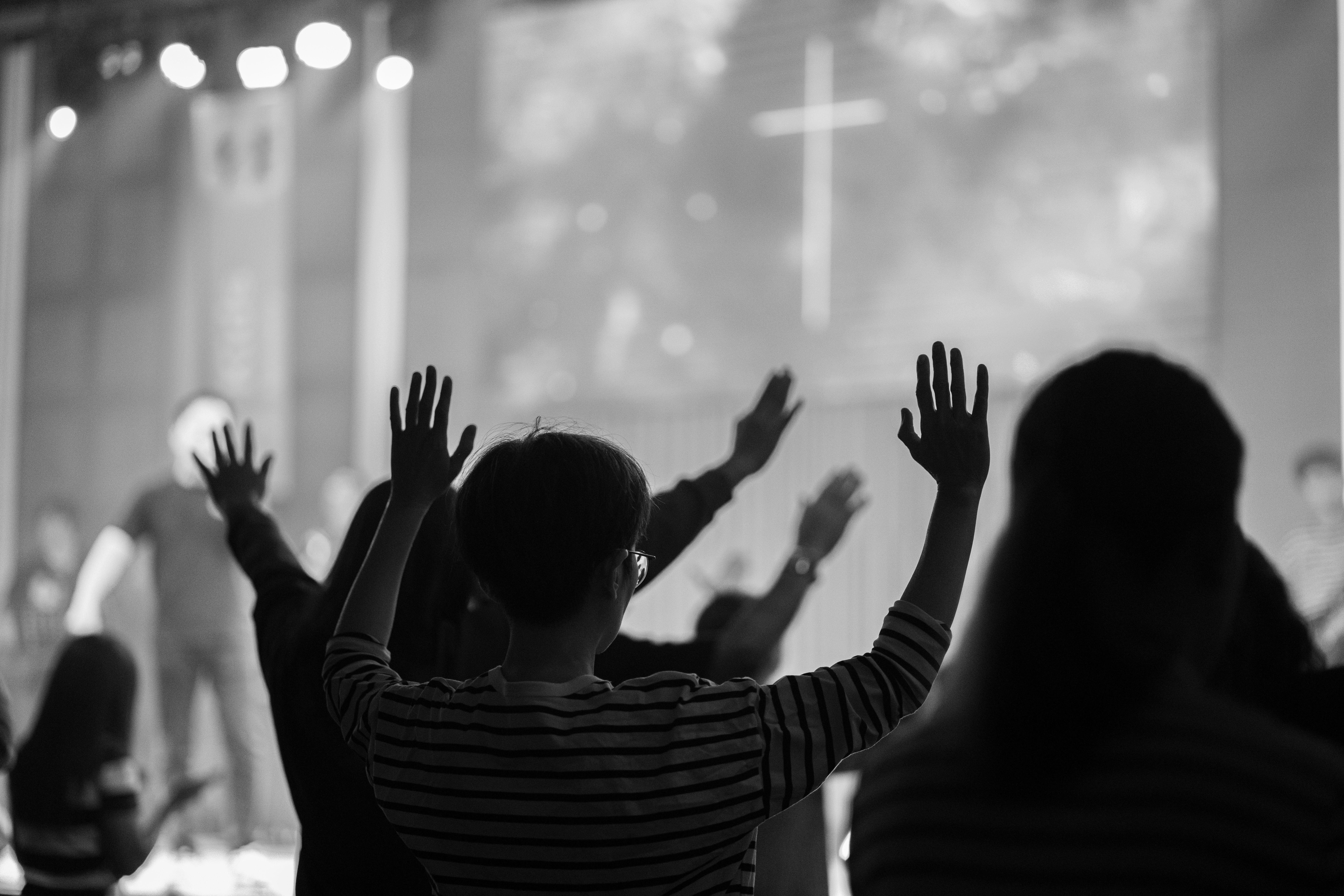
WORSHIP. Strong churches practice life-giving worship. Whether traditional, classical, modern, country, blue grass, jazz or any other genre—or mix of several at a time—they experience worship not as a cold, formalized expression but as a heart-language of love for God.
COHERENCE. Strong churches align their mission, doctrine, practice, preaching, teaching and culture so that it all flows together in one direction. There’s intentionality to it all.
DEPTH. Strong churches avoid shallow teaching, relationships and programs like the plague. They refuse cliches, slogans and pre-fabricated ministry and insist instead on authenticity in message, fellowship and mission. Depth also means history. Modern evangelicals often act as thought they’re the first generation of believers and what came before isn’t worth thinking about. The result is that we become rootless and subject to whatever theological fads come our way.
COURAGE. Strong churches have courage. Not just courage to take stands for biblical truth when confronted by immoral cultural issues, but the courage to define themselves and their ministries apart from whatever historical, denominational or cultural pressures that attempt to squeeze them into a mold. They search always for their own voice.
TRUST. Strong churches have a high level of trust between pastoral leadership and lay leadership. They pay attention to communication and relationships between all levels in the congregation.
LEADERSHIP. Strong churches are continually identifying, training and putting into positions of authority new leaders. Leadership is the lifeblood of a growing church and without attention to it, churches grind to a halt.
SUPERNATURAL. I’ve saved the best for last, the trait that all strong churches have regardless of size, location or denomination. In addition to the other facets of their ministry, strong churches have a discernible otherness to them, a flicker of Holy Spirit glory at the borders of physical sight, a sense that the total is greater than the sum of its parts. Many years ago I visited Lindisfarne Island—“Holy Island” it’s called—located a few miles south of Edinburgh, Scotland on the northeastern shore of England. In the early Middle Ages it was the hub of missionary activity to the region as Celtic monks led by St Aiden travelled from Ireland to Northumberland with the gospel. Today, it’s a national heritage site and sea bird refuge. It’s also a place of spiritual pilgrimage that people visit from all over the world. During my visit, I was caught up in the amazing theatre of windswept sky, lonely beaches, and the lovely ruins of the cathedral and monastery where the great missionary movement was birthed. A small Celtic cross that I bought there sits on my desk as I write these words. But this isn’t just a travelogue or a pleasant memory that I’m getting at. There’s something else at Lindisfarne that most people who visit there have experienced. It’s known as a “thin” place, one of those spiritual locations where the veil between heaven and earth is so thin that you can see from the one right into the other. That’s what strong churches have that mark them off from other churches. You can see through them to the living and eternal reality of the Kingdom.
Worship “as a heart language for God.”
Beautiful image…
Thanks